See the Whole Child. Transform the Whole System with the Performance Tracking System
What is the Performance Tracking System (PTS)?
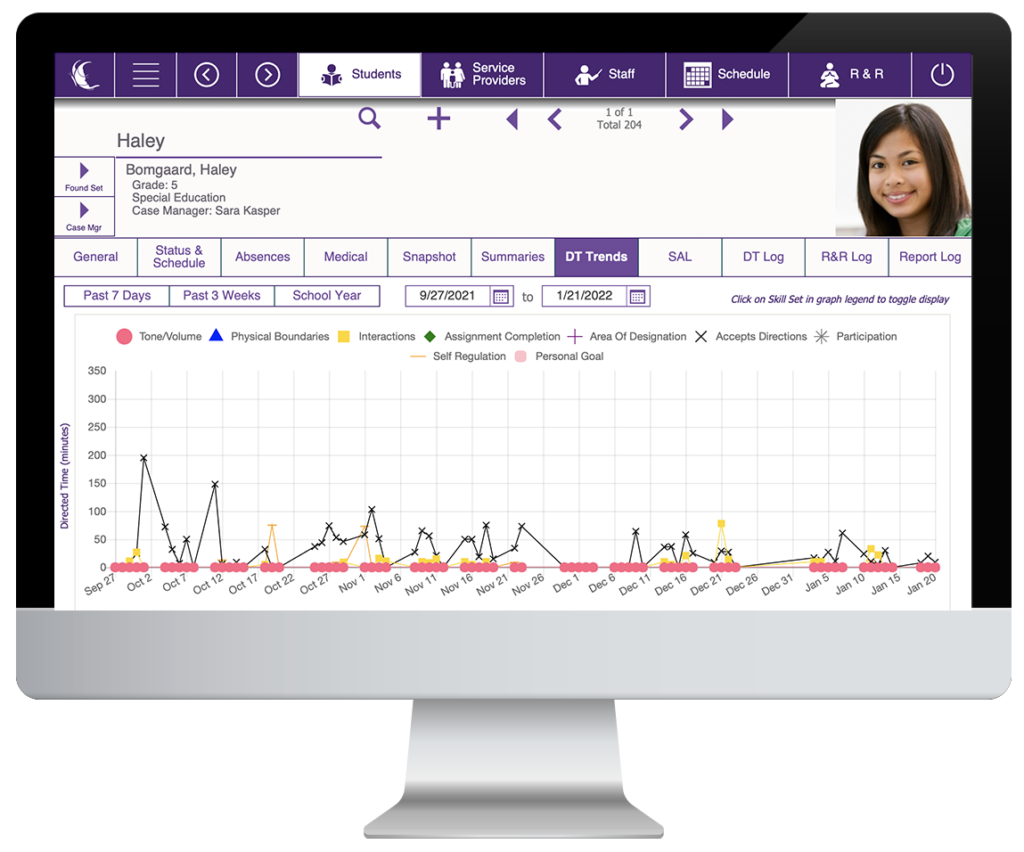
The Performance Tracking System (PTS) is a custom-built application designed to operationalize the concepts and methodology of Teach to Heal. It captures, manages, and reports data that reflects student engagement, regulation, and progress across multi-tiered systems of support (MTSS). Unlike generic behavior tracking tools, the PTS is uniquely structured to quantify the relational and developmental components central to trauma-responsive practices that support mental health.
Originally developed in 2000 to support students in highly restrictive settings, the PTS has evolved over two decades to meet the expanding needs of schools and students. Early paper and pencil processes evolved to spreadsheets, and the full-featured database application of the PTS was first deployed in Owatonna, Minnesota, in 2019. PTS has undergone annual refinements based on field feedback and distillation of desired student outcomes and is now up to version 5.
Built on the Claris FileMaker platform, the PTS is part of a broader ecosystem that includes shared language, consistent expectations, and actionable data. It supports Tier I classroom regulatory practices, common language, and predictability, Tier II and Tier III self-monitoring, and team-based decision-making through objective, real-time insights. The system empowers educators to respond effectively to dysregulation, reduce barriers to learning, and sustain student engagement.
How Does the PTS Differ from Other Existing Programs?
The Performance Tracking System is not an IEP management tool, nor is it a behavior tracker or a simple reporting add-on. It is a purposefully built application designed to quantify and support the multifaceted framework of Teach to Heal: a mental health responsive, relational approach to educational transformation.
While many programs offer data collection or reporting features, none are designed to capture the developmental, regulatory, and relational dimensions that the PTS tracks. It is not a plug-in or a template that can be replicated by layering a report writer onto a student information system. The PTS was built from the ground up to reflect the lived experience of students and educators navigating complex mental health and behavioral landscapes.
What Sets the PTS Apart:
- Integrated with Teach to Heal Methodology: Every data point is tied to a developmental skill set, regulatory practice, or relational strategy. It is not generic; it is deeply contextual.
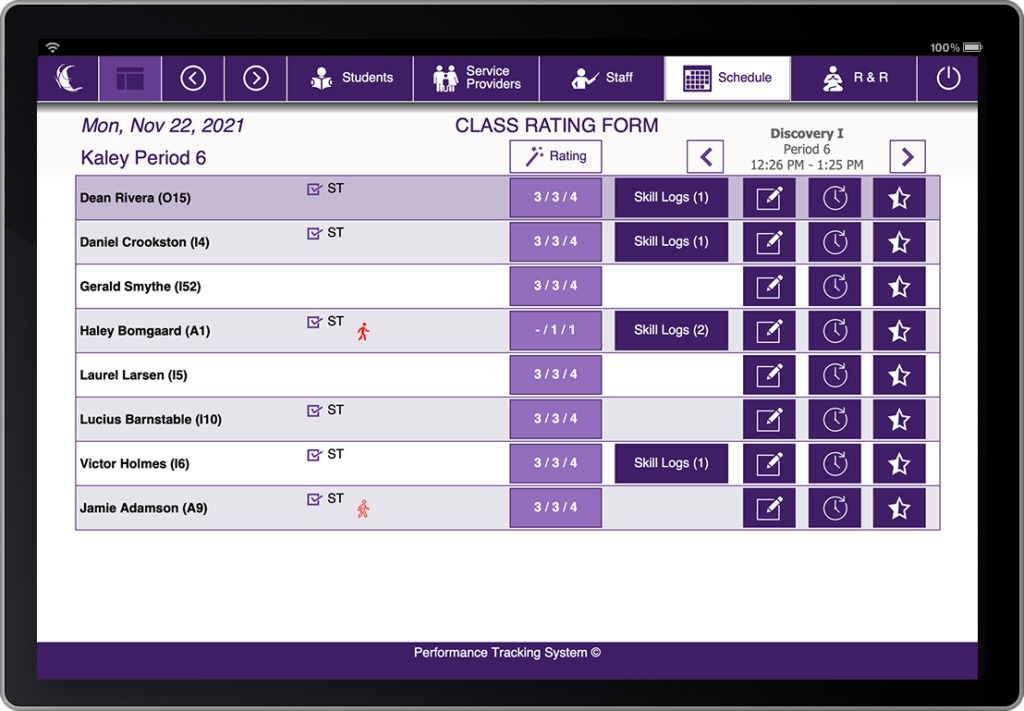
- Supports Tier I, II, and III Interventions: From classroom consistency to individualized self-monitoring, the PTS scaffolds student growth across all levels of support.
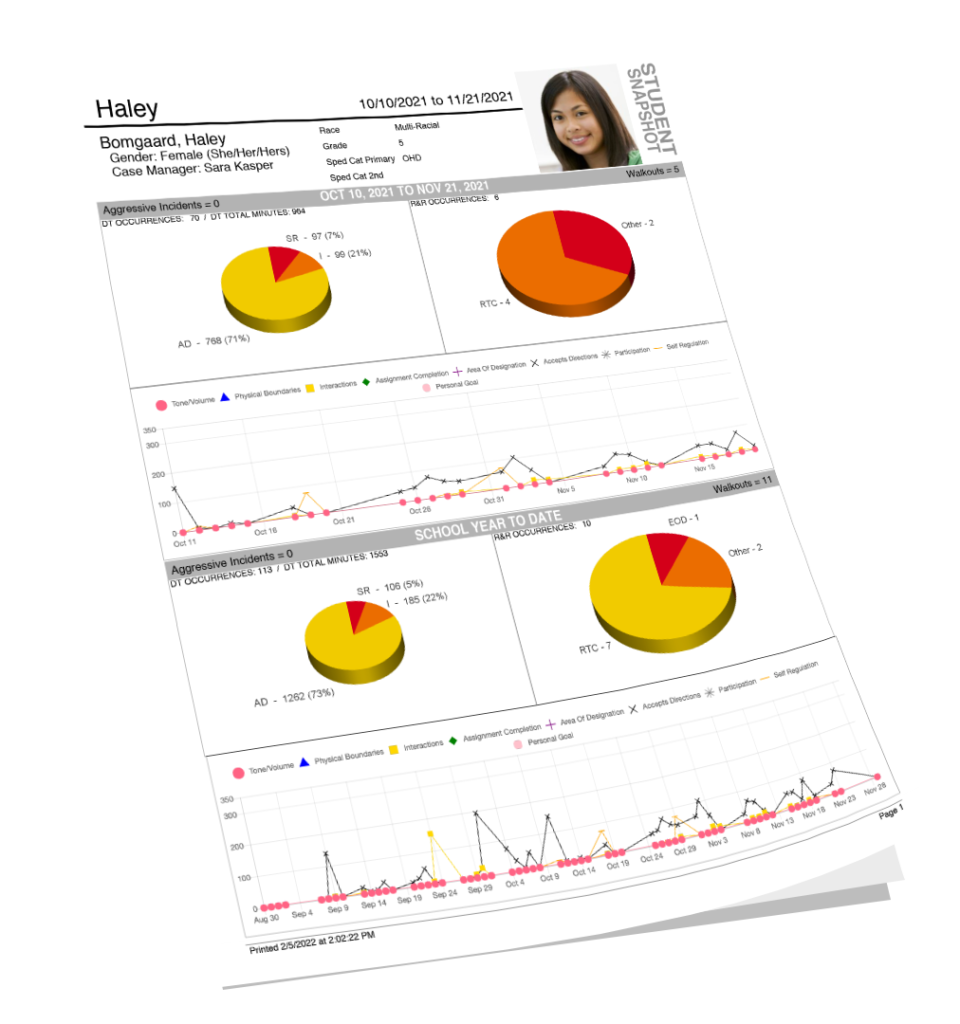
- Provides Actionable, Objective Data: The system tracks conditions that lead to dysregulation or disengagement, allowing teams to adjust strategies in real time.
- Establishes Common Language Across Adults: The PTS reinforces predictable, non-escalatory communication, reducing power struggles and increasing student engagement.
In short, there is no other system that does what the PTS does, because no other system was designed to serve the unique, layered needs addressed by Teach to Heal.
Built for complexity. Designed for connection.
Where regulation, relationship, and readiness intersect.